Physical Address
304 North Cardinal St.
Dorchester Center, MA 02124
Physical Address
304 North Cardinal St.
Dorchester Center, MA 02124

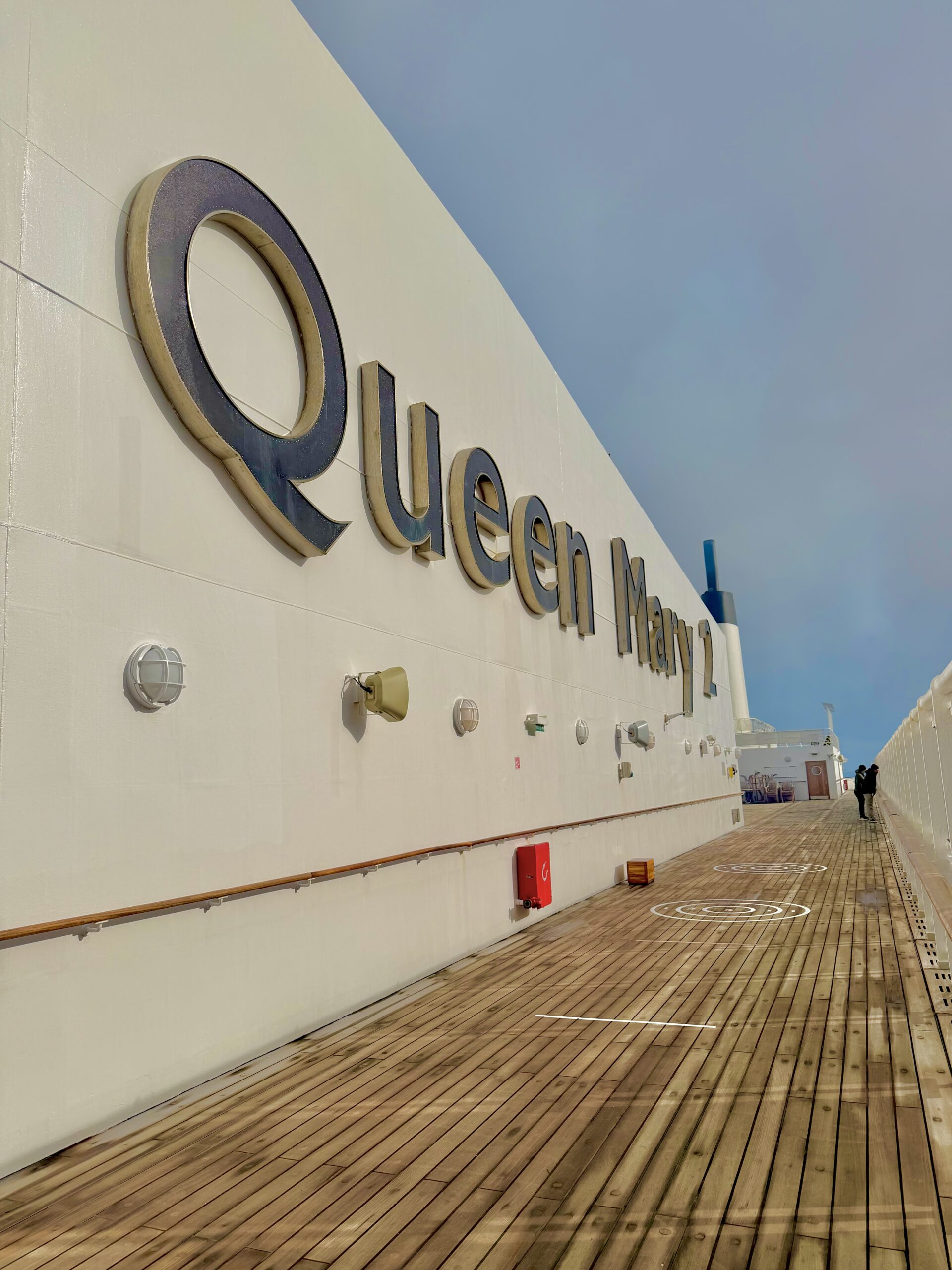
I’ve been fascinated by Titanic since 1997 — first by the film, and later by the real history behind it. The ships, the stories, the ocean, the era… all of it stayed with me. And somewhere along the way, the idea of crossing the Atlantic by shipsettled into my mind like a quiet promise.
This year, I finally kept it.
My first cruise ship.
My first ocean crossing.
My first time in the United Kingdom — and my first time sailing away from it.
All of these “firsts” unfolded aboard the Queen Mary 2, a vessel built for the very thing I wanted to experience.
For half my life, I’ve read about the North Atlantic and the great liners that crossed it — especially the one that never reached New York. So it felt almost inevitable that one day I would make this journey myself, westbound, from the Old World to the New.

The first thing that struck me was the sheer size of the Queen Mary 2. It was like boarding an enormous moving building—grand yet stable, elegant yet engineered for rough seas. Even with its size, I still felt the ocean. When the waves picked up, you could feel the ship sway enough that walking in a straight line became surprisingly difficult. But the crew, the food, and even the coffee remained unfazed. Operations were smooth, calm, practiced. It was a reminder of what an ocean liner really is: a vessel built not for short warm-weather cruises, but for crossing oceans the way airplanes cross skies.
Inside, the ship felt like a self-contained city. There was a movie theater, a fully stocked library, shows every night, a spa, a swimming pool, lounges, a ballroom, restaurants, and quiet corners everywhere. You could spend the entire day socializing—or spend the entire day without speaking to a single person.
For several days, there was no land, no coastline, not even a bird. Just the ship, the sea, and the horizon. The Atlantic wrapped around us in every direction. It felt vast in a way that’s difficult to describe. At times, it felt calming. At times, almost lonely. But most of the time, it simply felt humbling.
No iceberg sightings.
No storms.
Just endless water.
And the strangest part?
No jet lag. No time changes.
Just a slow and steady crossing, carried by the pace of the ocean instead of the speed of a plane.
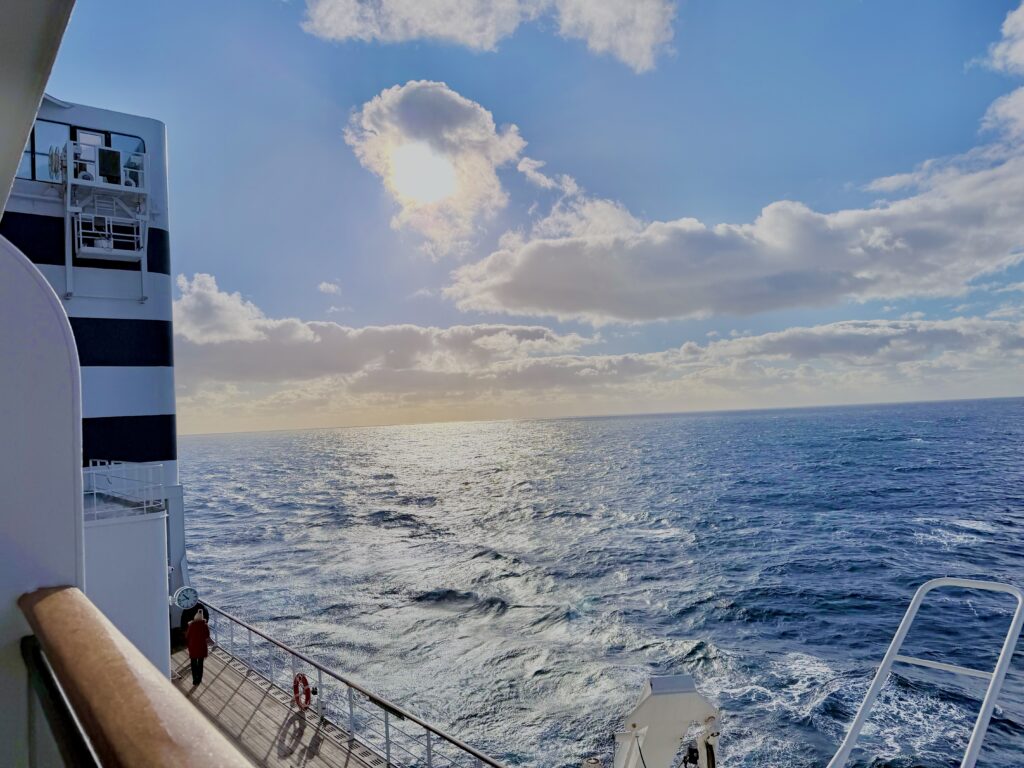
I took photos, wandered the decks, stared at the water for long stretches of time, and did a lot of thinking. There’s something about being surrounded by nothing that forces you inward. You don’t see what’s beneath you, you don’t see what’s ahead of you, and you don’t see what’s around you. For a moment, it feels like you’re alone in the world. A quiet kind of isolation—but not a frightening one.
Sometimes I stayed inside, watched shows, enjoyed the performances, or simply sat with a cup of coffee. The entertainment was truly impressive—high-quality productions that made you forget you were in the middle of the Atlantic.
Other times, I walked outside on the open deck. The wind was strong, the air was cold, and the ocean felt endless. But standing there—just watching the ship carve its way across the water—was one of the calmest feelings I’ve experienced in a long time.
What I loved most was the freedom:
You could be as social or as solitary as you wanted.
You could choose energy or quiet, company or solitude.
You could explore or retreat.
It felt… intentional. Like the ocean was creating space for both the outside world and the inner world.
The westbound route carries its own history — Southampton to New York, the direction of millions of journeys before mine.
Immigrants, dreamers, families seeking something different.
Crossing the Atlantic with hope, uncertainty, and everything they owned.
Standing on the deck, facing the North Atlantic winds, I couldn’t help imagining them — what they felt, what they feared, what they hoped for.
The weather wasn’t great.
The stars never appeared.
But the feeling — the weight of history — was unmistakable.
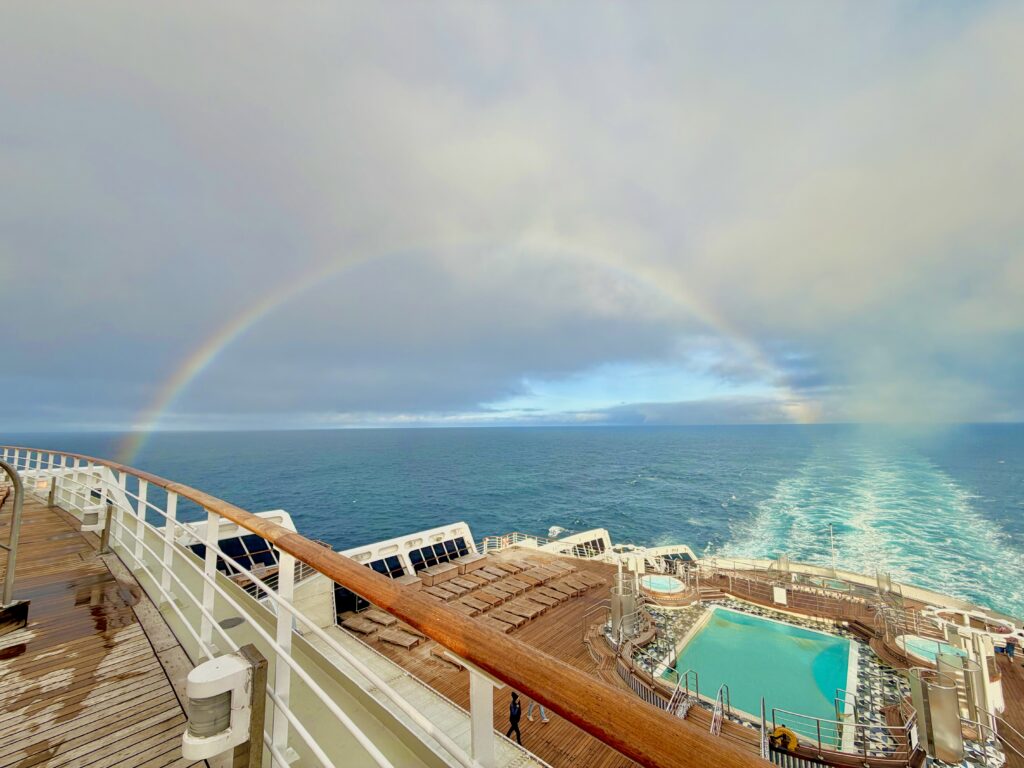
Unlike many modern cruise ships, the Queen Mary 2 doesn’t have water parks, botanical gardens, or massive theme-park structures. And honestly, it doesn’t need them.
It was designed to cross oceans. To hold steady against rough seas. To move with purpose.
And despite having fewer “resort-style” attractions, it was still beautiful—elegant in a classic way. I loved exploring its decks, its hallways, its lounges. I loved the food, the dining experiences, the views, the rituals of ship life. Breakfast could have had more variety, but that’s a small note in an otherwise wonderful experience.
I was overwhelmed. Grateful. And genuinely amazed by the idea that you can live, eat, watch movies, enjoy shows, dance, read, swim, sleep, and dream—all while sailing across one of the most powerful oceans in the world.
What the Crossing Left With Me
I didn’t come on this voyage looking for answers or transformation.
But it’s impossible to cross an ocean slowly and not feel something shift inside you.
A quiet sense of achievement.
A connection to the people who crossed before.
A feeling of participating in a long, human tradition.
I think the younger version of me —
the kid who watched Titanic in 1997 and became obsessed with the Atlantic —
would have been proud.
And the present version of me stepped off the ship
with something soft, quiet, and meaningful.
I don’t know when I’ll cross the Atlantic by ship again.
But I know I want to.