Physical Address
304 North Cardinal St.
Dorchester Center, MA 02124
Physical Address
304 North Cardinal St.
Dorchester Center, MA 02124

“The Lord said to him, ‘This is the land of which I swore to Abraham, to Isaac, and to Jacob, saying, “I will give it to your descendants”; I have let you see it with your eyes, but you shall not cross over there.’”
— Deuteronomy 34:4
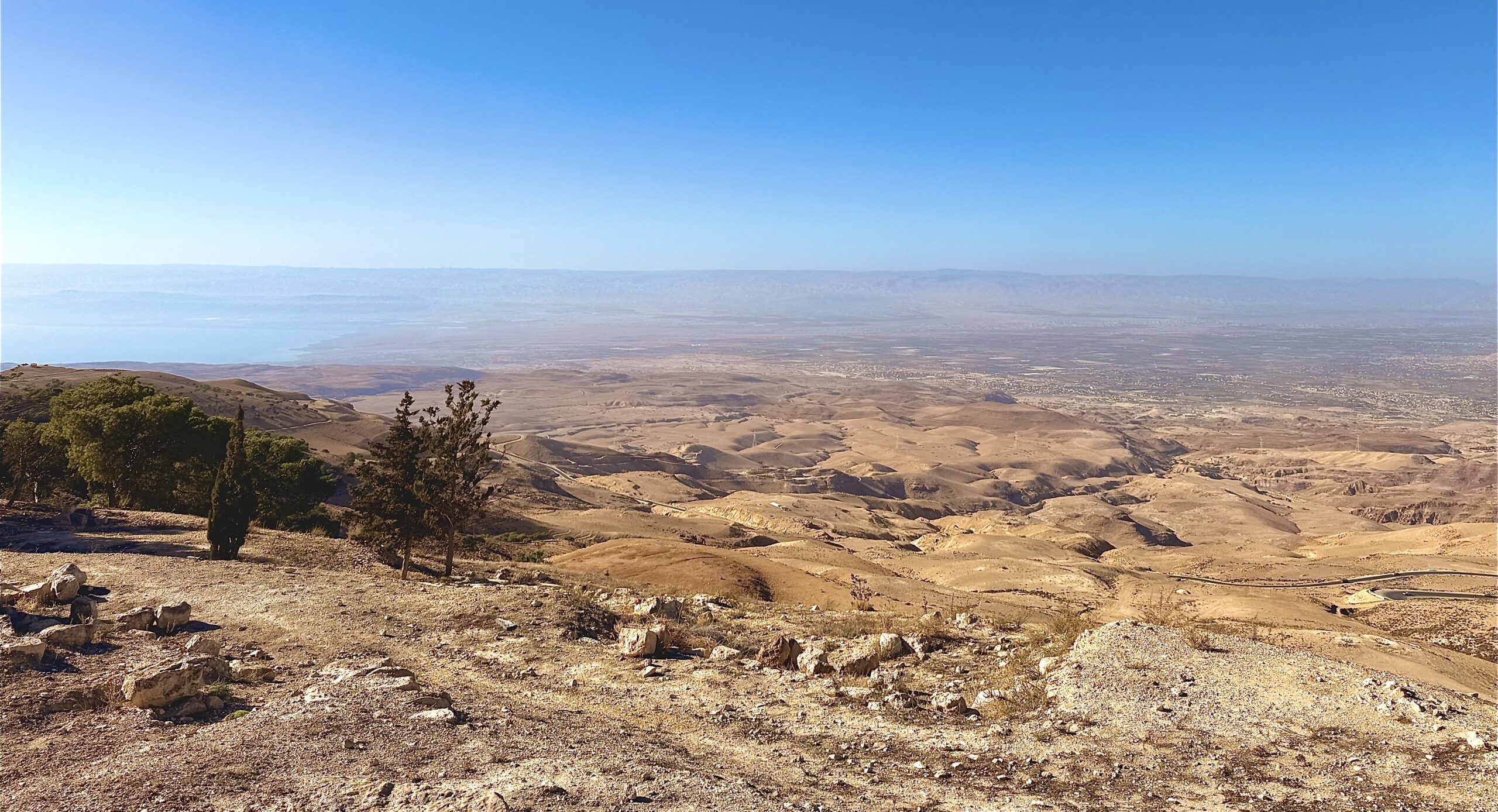
This past Christmas, on my birthday, I found myself standing on Mount Nebo — the very place where Moses stood thousands of years ago. It was here, according to Deuteronomy 34:4, that God showed Moses the Promised Land — but told him he could not enter it. That paradox of fulfillment and denial stayed with me long after I descended the mountain.
I had come to Jordan a few days earlier and visited the site where Jesus was baptized. But Mount Nebo — that was different. It wasn’t just a holy site; it was personal. I hired a driver and guide to bring me there, but the journey felt deeply solitary in the best possible way.
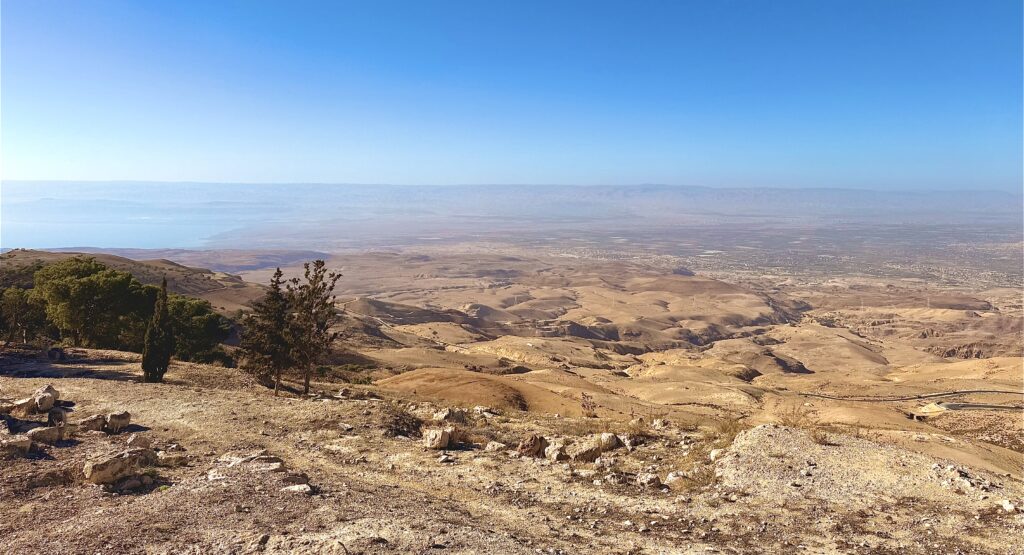
When I arrived, the air was clear and the weather perfect — a quiet winter sun cast long shadows over the hills. The view was far more expansive than I expected. You could see the Dead Sea shimmering in the distance, the edges of Jericho, and even the faint outline of Lake Galilee. From this single vantage point, the entire biblical world unfolded.
It was breathtaking — but also sobering. I couldn’t stop thinking about Moses. After all he had done, after leading his people through the wilderness for forty years, he was only allowed to see the land he longed for — not enter it.
I stood at the same summit. I looked over the same valleys. And I felt… quiet. Not peaceful, not sad — just quiet. It’s hard to describe the emotion. It wasn’t about religion or even history alone. It was about longing — the deep ache of knowing something is right in front of you, yet forever out of reach. People say the longest distance isn’t between life and death, but between seeing something and not being able to reach it. Moses knew that feeling. On that day, so did I.
There were few people around. The ruins and mosaics — preserved with care by the Franciscan Custody — gave a glimpse into the sacredness of this place across centuries. There’s a solemn dignity to it all.
Inside the church, I saw intricately preserved mosaics, floor patterns telling stories in stone. Outside, an olive tree planted by Pope John Paul II in 2000 stood as a living symbol of peace. Each stone and artifact whispered something eternal.
This is a place not just of memory, but of healing — “a cure for both soul and body,” as one inscription said. Maybe that’s what it was for me too.
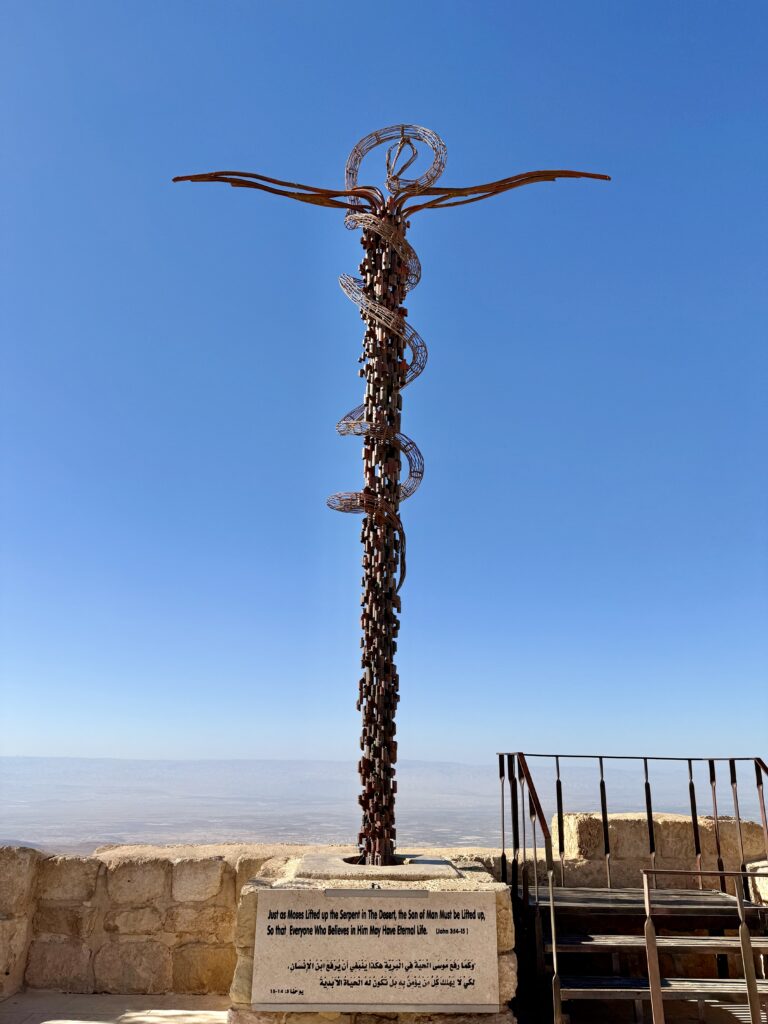
As I stood beside the bronze serpent sculpture — echoing the one Moses raised in the desert — I realized how connected everything was. Past, present, faith, doubt, journey, and silence.
If you’re ever in Jordan, go. Stand there. Feel it for yourself. See what Moses saw. Let it speak to you.
It was the best birthday I’ve ever had — not because of celebration, but because of clarity.